Resident Evil Zombies
Origins and Evolution
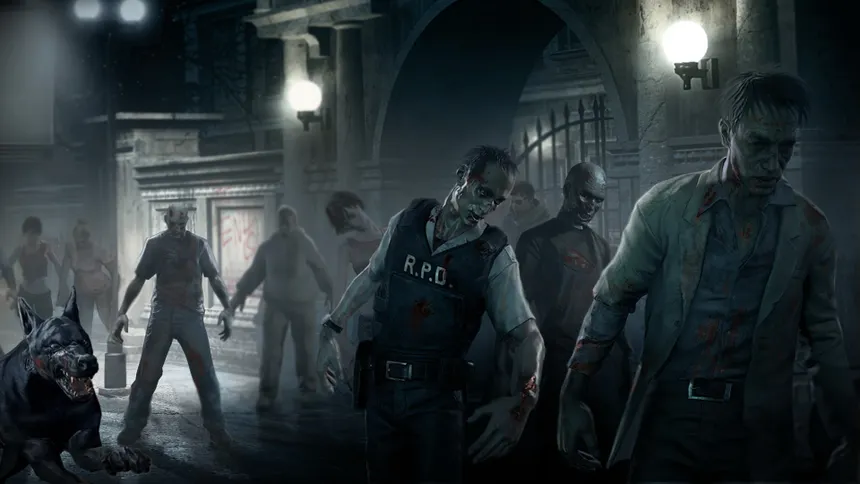
Resident Evil zombies, also known as the "T-Virus infected" in the game's lore, made their debut in the original Resident Evil game released in 1996, helping to define the survival horror genre. Unlike many zombie portrayals that attribute the undead to supernatural causes, Resident Evil established a science-fiction foundation for its zombies through the T-Virus (Tyrant Virus) created by the fictional Umbrella Corporation. This approach to zombification through viral infection rather than supernatural means has significantly influenced zombie media in the decades since. Throughout the franchise's history, Resident Evil zombies have evolved both in narrative explanation and in gameplay mechanics. The early games featured slow, shambling zombies reminiscent of George Romero's classic films, while later installments introduced variants like the faster, more aggressive Crimson Heads in the Resident Evil remake, the parasite-controlled Las Plagas hosts in Resident Evil 4, and the mold-infected "Molded" in Resident Evil 7. Each new game in the series has generally introduced new variations of infected enemies, expanding the lore while keeping gameplay fresh and terrifying.
The T-Virus, created as a bioweapon by Umbrella Corporation, causes rapid cellular changes in its hosts, reanimating dead tissue and causing increased aggression and a hunger for flesh in living victims. The virus affects different organisms in different ways - humans typically become standard zombies, but animals and insects often mutate into larger, more aggressive forms, such as the giant spiders or zombie dogs found throughout the series. The infection process usually begins with a bite or scratch from an infected individual, though airborne transmission has been depicted in certain scenarios. Once infected, humans experience symptoms including fever, skin discoloration, necrosis, and eventually death, followed by reanimation as a zombie. The timeline varies, but transformation typically occurs within hours to days. Throughout the series, various strains of the virus have been developed, including the G-Virus, C-Virus, and T-Veronica virus, each with unique effects on their hosts. Umbrella Corporation's research into these viruses was initially presented as an attempt to create bioweapons and super soldiers, though later games revealed deeper motivations tied to the founders' desire for evolution and immortality.

Characteristics and Types
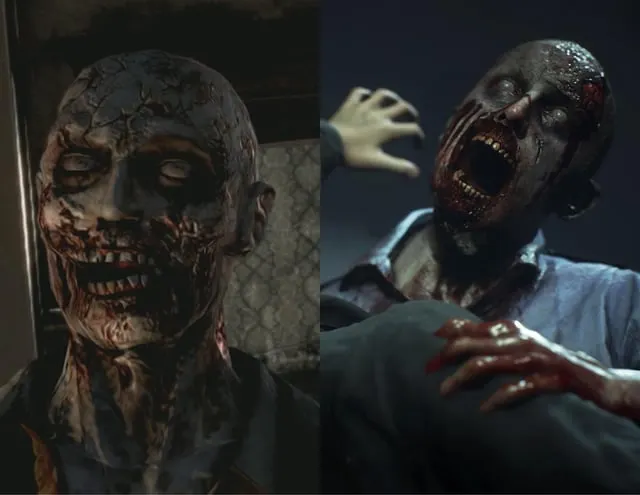
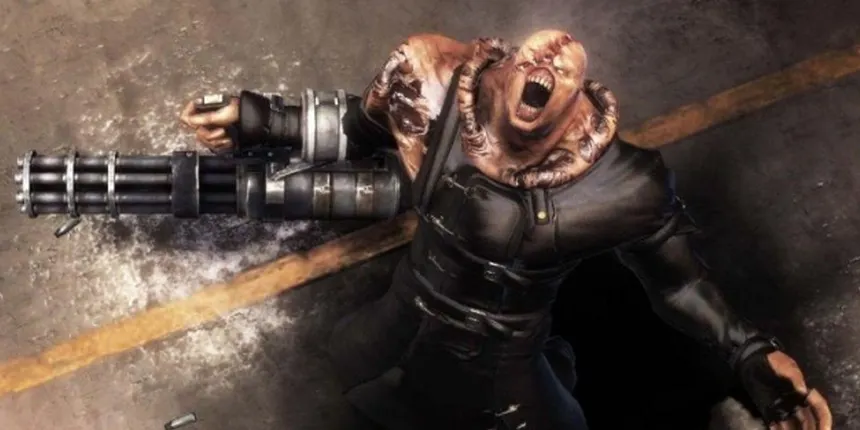
Classic Resident Evil zombies from the early games are characterized by their slow, shuffling gait, gray-green discolored skin, and vacant expressions. They moan and reach for victims, attempting to bite or grab them. These zombies have limited intelligence, primarily responding to basic stimuli like sound and movement, though they retain enough cognitive function to perform simple actions like opening doors or climbing stairs. Their primary weakness is significant damage to the brain, though early games also allowed players to temporarily disable them with enough damage to the limbs. As the series progressed, different types of zombies were introduced. Resident Evil 2 featured "Lickers," advanced zombies that had mutated further, losing their skin and developing elongated tongues and claws. Resident Evil 3 introduced the Nemesis, a highly intelligent bioweapon that could use weapons and hunt specific targets. Resident Evil 4 marked a significant shift with Las Plagas parasites, which created hosts that retained much of their human intelligence and could use weapons, coordinate attacks, and communicate with each other.
The Resident Evil series continues to expand its roster of infected enemies with each new installment. Resident Evil 5 introduced the Uroboros virus and Majini (Las Plagas-infected Africans), while Resident Evil 6 featured the C-Virus and J'avo, mutated humans capable of regeneration and transformation. Resident Evil 7 moved away from viruses to introduce the "Mold," a fungal bioweapon that created the Molded and allowed for mind control of infected hosts by Eveline, a bioweapon with psychic abilities. Resident Evil Village furthered this concept with the Cadou parasite, which caused varying mutations in different hosts based on compatibility. Beyond the standard infected, the series is known for its boss enemies - heavily mutated individuals who often retain some human consciousness while transforming into monstrous forms. Notable examples include William Birkin's G mutations in Resident Evil 2, Alexia Ashford's transformations in Code: Veronica, and Jack Baker's regenerative abilities in Resident Evil 7. The series also frequently features animals infected with various viruses, creating threats like Cerberus (zombie dogs), giant spiders, mutated alligators, and infected bats or insects. This wide variety of enemy types has become a hallmark of the franchise, ensuring that players never know what new horror awaits them in each installment.
The Umbrella Corporation
At the heart of the Resident Evil storyline is the Umbrella Corporation, a multinational pharmaceutical company that secretly develops biological weapons. Founded by Oswell E. Spencer, Edward Ashford, and James Marcus, Umbrella's public face was that of a pharmaceutical enterprise, while their true goal was the development of viral weapons and the pursuit of superhuman evolution. Their experiments led to the creation of the T-Virus and numerous other bioweapons that eventually led to multiple outbreaks throughout the series, including the destruction of Raccoon City. The company's iconic red and white umbrella logo has become one of the most recognizable symbols in gaming, representing corporate greed and scientific hubris.